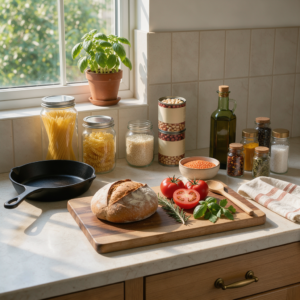
Photo by Shahid Hafiz on Unsplash
Treat fresh herbs like the plants they are. Tender, leafy herbs (cilantro, parsley, dill, mint) stay perky in the fridge with their stems in a small jar of water, loosely covered. Hardy, needle-like herbs (rosemary, thyme, sage) keep best wrapped in a barely damp paper towel in a breathable bag in the crisper drawer. Basil is the exception—store it like cut flowers at room temperature in a jar of water, loosely covered, and keep it out of the fridge to prevent blackened leaves.
Prep first: clean, dry, and sort
- Rinse quickly under cool water to remove grit. Avoid soaking, which waterlogs delicate leaves.
- Spin or pat completely dry. Excess moisture leads to slimy leaves and faster decay.
- Trim stem ends by a sliver. A fresh cut helps stems drink water in jar methods.
- Remove yellowed or bruised leaves now so they don’t speed up spoilage for the rest.
Step-by-step: Tender herbs in a fridge jar
Use this for cilantro, parsley, dill, mint, and tarragon. The goal is gentle hydration and protection from fridge drafts.
-
Fill a small jar with a shallow layer of cool water
An inch or so is enough to cover trimmed stem ends without submerging leaves.
-
Place the herbs in like a bouquet
Keep leaves above the rim. If any leaves touch the water, pluck the lower leaves off.
-
Loosely cover
Drape a clean produce bag or reusable cover over the top to reduce airflow without sealing tight.
-
Refrigerate upright
Place on a stable shelf (not the door) so temperature stays steady.
-
Maintain every day or two
Change the water if cloudy. Remove any wilted sprigs so the rest stay fresh.
Step-by-step: Hardy herbs in a damp wrap
Choose this for rosemary, thyme, sage, oregano, marjoram, and chives. These herbs prefer cool humidity, not a water jar.
-
Lay herbs on a barely damp paper towel
The towel should feel cool and just moist, not wet.
-
Roll into a loose bundle
Avoid tight compression so leaves can breathe.
-
Slip into a breathable bag or container
Use a partially open zip-top bag or a produce bag. Don’t seal airtight.
-
Store in the crisper drawer
This area stays cool with balanced humidity, ideal for hardy herbs.
-
Refresh if the towel dries out
If it’s bone-dry, lightly re-dampen; if it’s wet, replace and dry the herbs before re-wrapping.
Basil needs special treatment
Basil leaves dislike cold and can turn black in the fridge. Treat basil like cut flowers: trim the stems, place them in a jar with a little cool water, keep the leaves above the rim, and leave the jar on the counter away from direct sun or heat. Loosely cover to reduce wilting. Change the water if it clouds. If your kitchen runs hot, you can briefly refrigerate right before cooking, but return basil to room temperature before using for the best flavor and texture.
When space is tight: the paper towel bag method
For mixed bunches or when jars are impractical, line a large resealable bag with a dry paper towel, add dry herbs in a single layer or loose bundle, press out excess air without crushing, and seal most of the way closed. Store in the crisper. This method is simple and works reasonably well for both tender and hardy types, though jar storage usually keeps tender herbs perkier.
Freezing herbs for later
Freezing preserves flavor well, especially for cooking. Texture softens after thawing, so use frozen herbs in soups, stews, dressings, marinades, and homemade sauces rather than as a fresh garnish.
-
Freeze leaves plain
Spread dry leaves on a tray, freeze until firm, then move to a freezer bag. This keeps them from clumping.
-
Or freeze chopped herbs in oil
Chop, spoon into ice cube trays, top with olive oil or neutral oil, and freeze. Store cubes in a freezer bag to drop into hot pans.
-
Label with herb and date
Names look similar when frozen; labeling helps you grab the right flavor fast.
Everyday care: make freshness last
- Store away from the fridge door. Temperature swings shorten shelf life.
- Give herbs room. Crowding leads to bruising and trapped moisture.
- Pick from the outside. Use older or droopier sprigs first.
- Keep leaves above water in jar methods. Submerged leaves break down fast.
- Taste before using. If flavor has dulled, add more or switch to a different herb that still pops.
Common mistakes and easy fixes
What to do
- Dry herbs thoroughly before storing
- Refresh water and trim stems on jar-stored herbs
- Use breathable containers for humidity without sogginess
- Freeze extras before they decline
What to avoid
- Sealing herbs airtight while wet
- Refrigerating basil with the rest
- Letting leaves sit in water
- Crushing bunches at the back of the fridge
How to tell when herbs are past their prime
Toss herbs that smell sour, feel slimy, or show dark, mushy spots. Wilted leaves can often be revived briefly in cold water, but if they remain limp or translucent, they’re best for cooked dishes only. Hardy herbs that have dried at the edges still flavor stews, but trim off brittle tips. If you see fuzzy growth or an off smell, discard the bunch.
Ideas for using herbs before they fade
Turn big bunches into quick pesto, chimichurri, herb butter, or simple salad dressings. Fold chopped herbs into scrambled eggs, sprinkle over roasted vegetables, or finish soups for brightness. If you’re batch cooking, stir herbs into homemade sauces or toss them into simple vegetarian meals to add fresh, aromatic lift without extra effort.
Fresh herbs: quick FAQs
Should I wash herbs before storing?
Yes, give a quick rinse and dry thoroughly. Storing herbs wet leads to slime and faster spoilage.
Can I store all herbs in water like flowers?
No. Tender herbs do well in jars of water in the fridge, but hardy herbs prefer a damp wrap. Basil stays in water at room temperature.
How often should I change the water for jar-stored herbs?
Change it when it looks cloudy or every couple of days. Trim the stems slightly if they look darkened.
Is it okay to freeze whole leaves?
Yes. Freeze them flat on a tray, then bag. They’ll be softer after thawing, so use in cooked dishes, not as a garnish.
Why did my basil turn black in the fridge?
Cold damage. Basil prefers room temperature—store it in a jar of water on the counter, loosely covered.