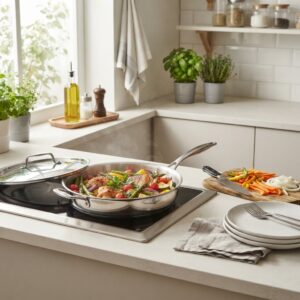
Photo by Nick Nice on Unsplash
To keep vegetables from burning, preheat the oven, use a hot-but-not-extreme temperature (usually 400–425°F), cut pieces to a uniform size, toss with enough oil to lightly coat, spread them out on a preheated sheet pan, and roast on the middle rack. Flip once and rotate the pan for even browning. Dense, low‑sugar roots like potatoes handle higher heat; very sugary roots (carrots, beets, sweet potatoes) do better toward the lower end of the range.
Prep that prevents burning
- Dry thoroughly: After rinsing, pat vegetables dry. Surface water turns to steam and can cause patchy cooking that tips into burning at the edges.
- Uniform size: Aim for similar thickness so pieces finish at the same time. Thin ends burn fast.
- Trim wisely: Remove papery skins or singe-prone fronds unless you want crisp bits (watch them closely).
Oil, seasoning, and coating
- Use enough oil to lightly coat: A thin, even film promotes browning and protects surfaces. Dry spots burn.
- Salt before roasting: Salt draws moisture and seasons throughout. Add fragile spices or fresh herbs after roasting to avoid scorching.
- Sweet glazes are for later: If using honey, maple, or balsamic, add in the last 5–10 minutes to prevent burning.
Pan setup and oven placement
- Choose a sturdy, light- or medium-colored sheet pan. Dark pans brown faster and can overdo the underside.
- Line smartly: Parchment helps with sticking and cleanup. Foil browns faster on the bottom; watch closely. Skip silicone mats for crisp edges.
- Preheat the pan: Sliding vegetables onto a hot pan jump-starts browning and reduces sticking.
- Use the middle rack: It balances top and bottom heat. Move a rack up for extra browning at the end if needed.
Set the right temperature
- Most mixed vegetables
- 400–425°F on the middle rack
- Delicate or sugary veg
- 375–400°F to prevent scorching
- Dense root vegetables
- 425°F if well-spaced and evenly cut
- Convection (fan)
- Reduce temp by about 25°F and start checking a bit earlier.
Step-by-step: Roast without burning
-
Preheat oven and pan
Set the oven to 400–425°F and place an empty sheet pan on the middle rack to heat with the oven.
-
Cut vegetables to a uniform size
Aim for even thickness. Keep delicate items (like broccoli florets) a bit larger than dense items so they finish together.
-
Dry, then oil and season
Pat veggies dry. Toss with enough oil to coat and season with salt and pepper. Reserve sweet glazes and delicate herbs for later.
-
Spread in a single layer with space
Carefully add vegetables to the hot pan. Leave visible gaps between pieces; crowding traps steam and prevents browning.
-
Roast, then flip once
Roast until the undersides are golden, then flip and rotate the pan front-to-back for even heat. Keep roasting until tender.
-
Finish and adjust
In the final minutes, add any glaze or grated cheese and watch closely. Remove when browned on the edges and just tender inside.
Timing cues by vegetable type
| Vegetable type | Heat guide | General range | Doneness cues |
|---|---|---|---|
| Dense roots (potatoes, carrots, beets) | 400–425°F | About 25–45 minutes | Deep golden edges; a knife slides in with gentle resistance |
| Crucifers (broccoli, cauliflower, Brussels sprouts) | 400°F | About 18–30 minutes | Browned tips, tender stems, still a bit firm in the center |
| Soft veg (zucchini, bell peppers, mushrooms) | 400°F | About 12–25 minutes | Edges lightly browned; centers juicy, not collapsed |
| Onions and squash (butternut, acorn) | 375–400°F | About 25–40 minutes | Translucent centers; caramelized edges without black spots |
| Tomatoes and asparagus | 375–400°F | About 10–20 minutes | Wrinkled skins or tender spears; color deepened, not charred |
Know when to pull the pan
- Look for color, not clock time: Golden-brown edges with a little charring on a floret tip is good; black patches mean bitter.
- Test tenderness: A knife should slide in with slight resistance for roots; soft veg should be tender but not mushy.
- Smell matters: A toasty, nutty aroma means sugar is caramelizing. A sharp burnt smell means act fast—flip, lower heat, or pull them.
Avoid these common mistakes
- Overcrowding the pan: If vegetables touch, steam builds and then burns. Use two pans instead.
- Skipping the flip: One turn helps even browning and prevents hot spots from creating burnt patches.
- Adding sugar too early: Sweet glazes burn before the centers cook through.
- Relying on the broiler: Broilers char quickly without softening insides; use only for a brief finish.
- Uneven cuts: Thin ends and small pieces will blacken while thicker pieces lag behind.
Finishing touches that won’t burn
- Toss with lemon juice or vinegar right after roasting to brighten without scorching.
- Add fresh herbs, sliced scallions, or delicate spices once the pan is out of the oven.
- For a glaze, return to the oven for just a few minutes, watching closely.
Roasting vegetables without burning: FAQs
Should I cover vegetables when roasting?
No. Covering traps steam, softening vegetables without browning. Roast uncovered, then tent briefly after if you want them a bit softer.
Is parchment paper or foil better to prevent burning?
Parchment helps prevent sticking and gives even browning. Foil browns faster on the bottom, so watch closely if you use it.
Can frozen vegetables be roasted without burning?
Yes. Roast from frozen on a preheated pan at 425°F. Don’t overcrowd, and wait to flip until excess moisture cooks off.
How much oil should I use?
Just enough to lightly coat—usually a thin film on each piece. Too little leads to dry, burnt spots; too much makes them soggy.
Why do my vegetables burn on the bottom?
Likely a very dark pan, overly high heat, or sugar-heavy glazes added too early. Try parchment, reduce heat slightly, and glaze at the end.